Porta Sylvarum Animæ
A primitive sanctuary taking shape on six acres of South Carolina woodland. Not a retreat you book.
A gate that is slowly, deliberately, opening.
‘She’ is already here
The forest is already there, at the edge of the property. We’re just helping her remember herself.
This isn’t a development. It isn’t a glamping site with a clever name. It is six acres inclusive of a half acre pond, natural wild ground that asked, gently, to be listened to first — and a creature willing to do that listening, well before reaching for a hammer.
Listening with this Mantra: If a thing helps people remember how to listen to nature, it belongs here. If it doesn’t, it doesn’t. That mindfullness is the filter every decision passes through.
A name that breathes
Porta Sylvarum Animæ — the gate of the soul of the wildness.
Porta — not just a gate, but a passage between states of being.
Sylvarum — the deep woods, ancient and plural, a chorus rather than a single tree.
Animæ — the soul, but also the breath, the animating presence underneath everything.
Said plainly, in the language of a passing car: PSA
Public Service Announcement: Nature is calling.
The joke is real and the meaning is real, and neither cancels the other out.
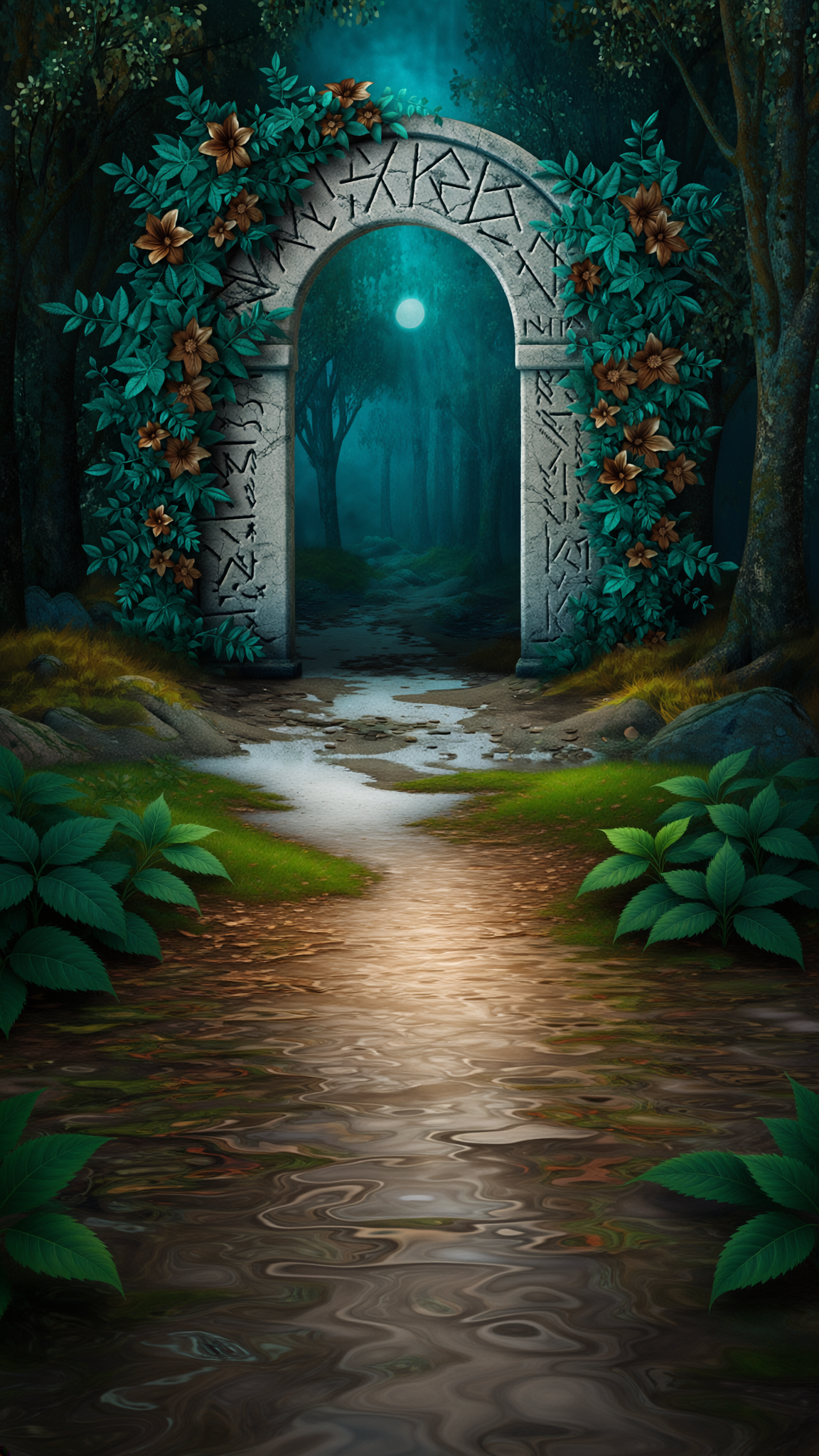
You don’t find a door. The air itself shifts. Welcoming you in.
What the water whispered
Restoration first. Discovery second. Disturbance, as little as possible.
The current work is unglamorous and exactly right: clearing dead and dangerous trees, pulling invasive brush, easing the pond back toward health, walking the edges until the land’s own paths start to show themselves.
Beneath the pond’s disturbed surface, a vivid, soft, blue clay turned up — likely kaolin, the same kind of material that’s quietly lined this water for longer than anyone’s been watching. It’s being treated as what it is: part of the pond’s own architecture first, a material worth understanding second. No rushing it into a jar. No pretending it’s not there.
Pond & aquatic vegetation
A slow restoration of the water’s natural balance.
Dead & dangerous trees
Cleared with care for what’s still growing around them.
Trail corridors
Found by walking and feeling, not drawn on a plan first.
Who this is for
Not campers. Students, in the oldest sense — people who come to sit at the feet of something older and just receive.
They exist in surprising numbers. The burned out. The overstimulated. The digitally saturated. Those barred by concrete and forced indoors. They’ve forgotten the sound of wind in trees without a soundtrack laid over it. They’ve forgotten what it feels like to be cold and okay with it. They’ve forgotten that they are nature, not separate from it.
The shape this takes draws from friluftsliv — the Scandinavian instinct toward open-air life as a way of being, not a weekend activity. It reflects the native instinctual need for connection to the land and the elements — and from barefoot, ground-level attention.
Pottery, well being and skincare formulation already live in this thinking too: clay, plant, water and skin as one continuous material.
Desire lines, made legible
A desire path is how a body tells the truth about where it actually wants to go.
Rather than impose a route, the trails here are being found — then marked just enough to trust, never enough to feel managed. Three quiet layers, in order of how far you’ve wandered:
Post markers
Created by hand, set at junctions where a choice actually matters.
Metal tags
Small, mid-trail — just enough waypoint confidence to keep walking.
Natural ground language
Cairns, placed logs — the land marking itself, in its own dialect.
What’s being watched, honestly
This is Phase 0 — stewardship before structure, on purpose.
There’s no booking page here because there’s nothing to book yet. Trail cameras near the boundary line keeps its own quiet log of who’s already living here — hawks, deer, pileated woodpecks, wood ducks, lizards, dragonflies, and whatever else passes beneath them at dusk. It’s a constant and welcome discovery. That’s the only guest list that matters right now.
Human-facing experiences — meditation, camping, photography, watching the light, yoga, star gazing and slow mornings — will follow the land’s own timeline, not a launch date. Humans will trickle in, finding their way here being drawn by the land’s own voice.

No reservations. Just the voice of the land.
The clearing of the trails, the slow return of the pond, the first post going into the ground — it’s documented in real time, mostly in pictures, mostly without much explanation. That’s where this lives for now. It’s not a retreat you book. It’s a gate that is slowly, deliberately, opening.
FOLLOW ON INSTAGRAM →